All Categories
Featured
Table of Contents
To asses danger Waydev enables you to measure how likely it is a specific devote will cause issues. In this case, there are particular information points that you should consider, such as the commit's size, how far do the modifications spread out, in addition to the modifications' depth. Continuous Combination (CI) and Continous Advancement (CD) are vital in today's engineering environment since they ensure that your team delivers software application in an iterative kind.
Our solution immediately gathers data from the Constant Combination and Continous Development pipelines and tracks Gitlab repos, enabling you to evaluate details without needing any type of manual input. This is an outstanding way to keep track of DevOps performance by focusing on DORA metrics. By automating these processes and measurements, you may have a clear view of how release is going, examine what effects burn-down rates, what causes bottlenecks, and how to solve them.
This allows you to reallocate resources to ship on time or enhance costs and interact project status to business leaders. When done right, the aligns company requirements with technology processes, making it possible for Engineering Supervisors to optimize efficiency and analyze dangers.
IT governance focuses on setting tactical instructions, policies, and oversight. IT management involves daily operations, carrying out tasks, and administering systems and services. Secret stakeholders are executive leaders, IT managers, end users from business units, and process owners. A governance council or committee offers oversight. Training needs to cover structure principles, new policies and procedures, governance functions and obligations, and any governance tools or systems being executed.
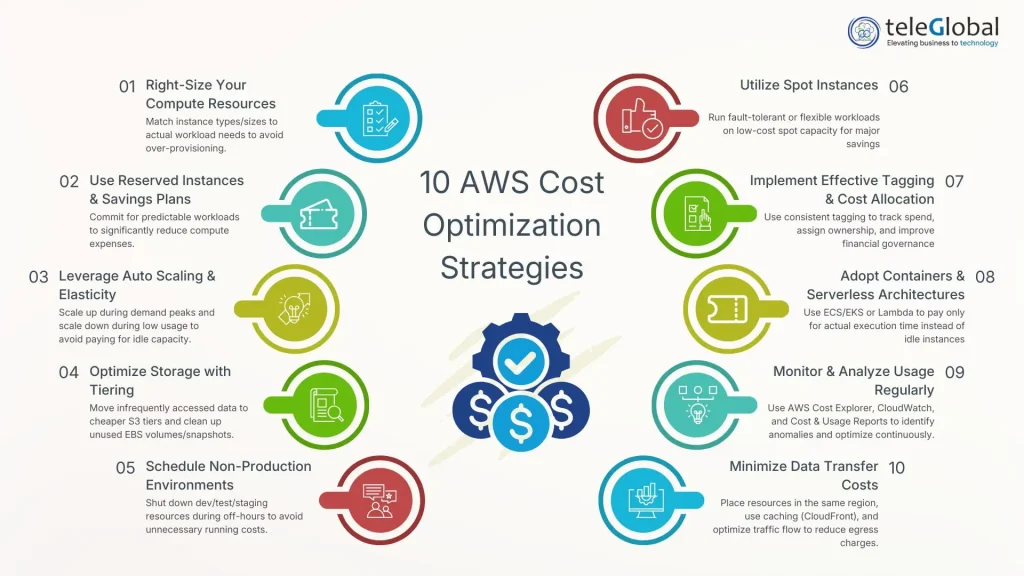
Effective Steps for Reducing Infrastructure Spend in 2026
Danger management identifies risks, examines effects, and develops mitigation techniques. It makes sure governance properly resolves info security, catastrophe healing, and regulative compliance.
IT governance manages governance and dangers while preserving compliance with industry and government policies. Optimizing IT governance needs the best mix of IT investments, policy and workers.
As organizations increase their IT financial investments, the value of a strong IT governance policy increases. Chief info officers (CIOs) drive IT governance strategy alongside other crucial stakeholders in the C-suite.
Proactive IT Asset Tracking for Budget GovernanceIn this postWhat is IT governance and why does it matter?Why worksIT governance essential for service success?What are the 5 actions to execute effective IT governance?What are the IT governance finest practices that drive results?How does IT governance work for small businesses?Why well-established IT governance is a company benefit Effective IT governance aligns technology decisions with organization technique, manages threat, and ensures IT resources are used efficiently. This guide covers each step in useful information, in addition to the frameworks, tools, and finest practices IT leaders utilize today.
How to Design Scalable IT Governance Frameworks
IT governance is a formal framework that directs and manages how a company's info technology resources are managed, so that IT activity supports and advances overall business objectives. It covers 4 interconnected areas:-preparation, arranging, and directing making use of innovation resources -safeguarding sensitive personal and corporate information and meeting regulative responsibilities - the day-to-day jobs the IT department carries out to meet agreed objectives - the policies and controls that safeguard the integrity and security of IT systems According to IBM, efficient IT governance is a key component of general service technique and business governance, often forming part of a broader Governance, Danger , and Compliance (GRC)policy. Efficient IT governance creates a direct link in between innovation financial investment and measurable business results. When governance is absent or inadequately developed, IT departments run in isolation, duplicating effort, collecting shadow IT, and producing compliance spaces. When governance is strong, IT decisions are made by the best people at the best level, resources are directed toward tactical top priorities, and danger is handled proactively. For organizations going through digital transformation, governance is what prevents innovation change from surpassing the organization's capability to take in and benefit from it. Lemon Knowing's IT application assistance solutions are designed to help groups embed governance procedures into daily workflows so adoption keeps speed with change. Implementing efficient IT governance and IT management follows a repeatable procedure. Engage senior IT managers, service unit leaders, compliance officers, and crucial partners. Designate clear responsibility for each governance domain. File escalation courses so that differencesare dealt with at the right level instead of defaulting upward or stalling totally. Describe the common IT governance errors companies make at this phase to avoid repeating them. The choice depends upon size, market, regulative environment, and maturity. The most widely embraced alternatives are compared in the table listed below. Structure Main focus Finest fit for IT governance and management, danger control, audit preparedness Large enterprises, managed industries IT service management aligned to service requirements Organizations with a fully grown IT service function International standards for IT service management and business IT governance Organizations looking for accredited, worldwide recognized governance CMMI(Capability Maturity Model Combination)Process enhancement rated on a scale of 1 to 5 Organizations benchmarking and enhancing development or delivery ability COSO (Committee of Sponsoring Organizations of the Treadway Commission)Internal control and enterprise threat management Organizations prioritizing financial controls and scams deterrence CIS( Center for Internet Security)Controls Cybersecurity and facilities resilience Organizations reinforcing technical security posture Lots of organizations integrate frameworks. Check out the necessary security certifications that enhance these governance frameworks. An IT governance plan just becomes real when it is recorded, focused on, and shared. The roadmap ought to specify: Short, medium, and long-term IT governance milestones Resource requirements and spending plan allocation Specific IT projects connected to organization objectives Interaction touchpoints for all stakeholders Training and capability-building activities for IT and business personnel Strategic alignment is the backbone of this step. Choosing the best mode for your organization shapes the entire roadmap. Communication is not a one-time occasion. All stakeholders- from the board and senior management to IT staff and end users-need to understand the governance plan, their role in it, and how success will be measured. Governance that is not determined does not enhance. Dashboard metrics generally cover: IT system performance and accessibility IT resource utilization and cost effectiveness Danger events and their resolution times Positioning between IT task outcomes and service objectives Compliance audit results Official external assessment by a recognized requirements body can include credibility and surface area blind spots that internal evaluations miss out on.

Latest Posts
Proactive Budget Planning for Modern Cloud Environments
How to Optimize IT Spending for 2026 Planning
Comprehensive 2026 Budget Planning for Success